10 Critical Signs of a Leaking Roof: An Austin Homeowner’s Guide
Last Tuesday, an Austin homeowner noticed a faint, tea-colored discoloration on their ceiling after a standard Central Texas downpour. They dismissed it as a minor AC condensation issue, but within 14 days, that tiny spot evolved into a $4,500 mold remediation project. It's natural to feel a sense of dread when you spot a mystery stain. You're likely weighing the fear of high repair costs against the hope that it's just a simple HVAC fix. This guide helps you identify the critical signs of a leaking roof so you can safeguard your investment and avoid the rapid decay caused by Austin’s 65% average morning humidity.
With over 35 years of experience keeping Texas covered, we understand that peace of mind comes from resilient protection and steadfast maintenance. You'll discover a clear checklist to confirm damage, learn to distinguish between minor wear and structural emergencies, and understand exactly when to call for a seasoned professional inspection. Our goal is to provide the expert assurance you need to ensure your home remains a safe, dry sanctuary regardless of the weather.
Key Takeaways
- Identify subtle interior warnings like bubbling paint or peeling wallpaper that signal moisture has breached your home’s protective envelope.
- Learn to distinguish between active and historical water stains to accurately prioritize the most critical signs of a leaking roof.
- Understand how Austin’s intense UV rays accelerate material degradation and what specific shingle changes indicate a loss of structural resilience.
- Discover a safe, systematic method for pinpointing leak sources while avoiding the hazards of navigating steep or wet roofing surfaces.
- Gain the assurance of knowing when to seek a professional inspection to safeguard your investment from costly structural repairs and mold.
Recognizing the Early Signs of a Leaking Roof
A roof leak is a breach in your home's exterior envelope that allows moisture infiltration into protected interior spaces. In Austin, these vulnerabilities often remain hidden until structural decay occurs deep within the attic or wall cavities. Our 35-year history at Pro Roofing Systems proves that homeowners frequently miss the subtle signs of a leaking roof because Central Texas storm patterns create micro-fractures that don't immediately cause obvious ceiling drips. We prioritize preventive detection to safeguard your home's structural integrity before the damage becomes irreversible.
The intense heat cycles in Travis County cause roofing materials to expand and contract, which eventually pulls at sealants and fasteners. When a storm hits, water finds these tiny gaps. Because the roof is a complex system, a leak at the ridge might not show up in the ceiling for months, slowly rotting the decking in the interim. Our seasoned professionals focus on identifying these "silent" failures to ensure your roof provides the steadfast protection your family deserves.
Why "Small" Leaks are a Big Deal in Texas
Austin's average humidity of 67% accelerates wood rot in attic rafters the moment moisture enters the envelope. Mold spores colonize damp drywall and plywood within 48 hours of a localized storm event. Capillary action is the physical process where water travels horizontally along support beams or electrical wires, moving away from the initial entry point to damage different areas of the home. These hidden paths mean the visible signs of a leaking roof rarely align with the actual puncture site, requiring an expert eye to trace the moisture back to its source.
The Cost of Delayed Detection
Delaying a repair turns a minor maintenance task into a major financial burden. A professional flashing repair in 2024 typically costs around $475, whereas a full ceiling and structural replacement can exceed $4,200 depending on the square footage. Moisture also compromises attic insulation, stripping away its thermal resistance and increasing monthly energy bills by 15% or more during peak summer months. Professional intervention offers the assurance that your roof performs at its best year-round, protecting your largest financial investment from the unpredictable Texas elements.
Interior Red Flags: Ceiling Water Damage and Beyond
Roof leaks don't always start with a heavy drip during a thunderstorm. Most early signs of a leaking roof are subtle, hiding in plain sight on your drywall or tucked away in the dark corners of your attic. Catching these issues within the first 48 hours of appearance can prevent mold growth and save homeowners thousands in structural repairs.
Water is patient. It follows the path of least resistance, often traveling 10 to 15 feet away from the actual roof breach before it pools and drips. This means a stain in your living room might actually be caused by a damaged vent pipe over your kitchen. Identifying these red flags early ensures your home remains a safe, dry sanctuary.
Identifying Ceiling Water Damage and Stains
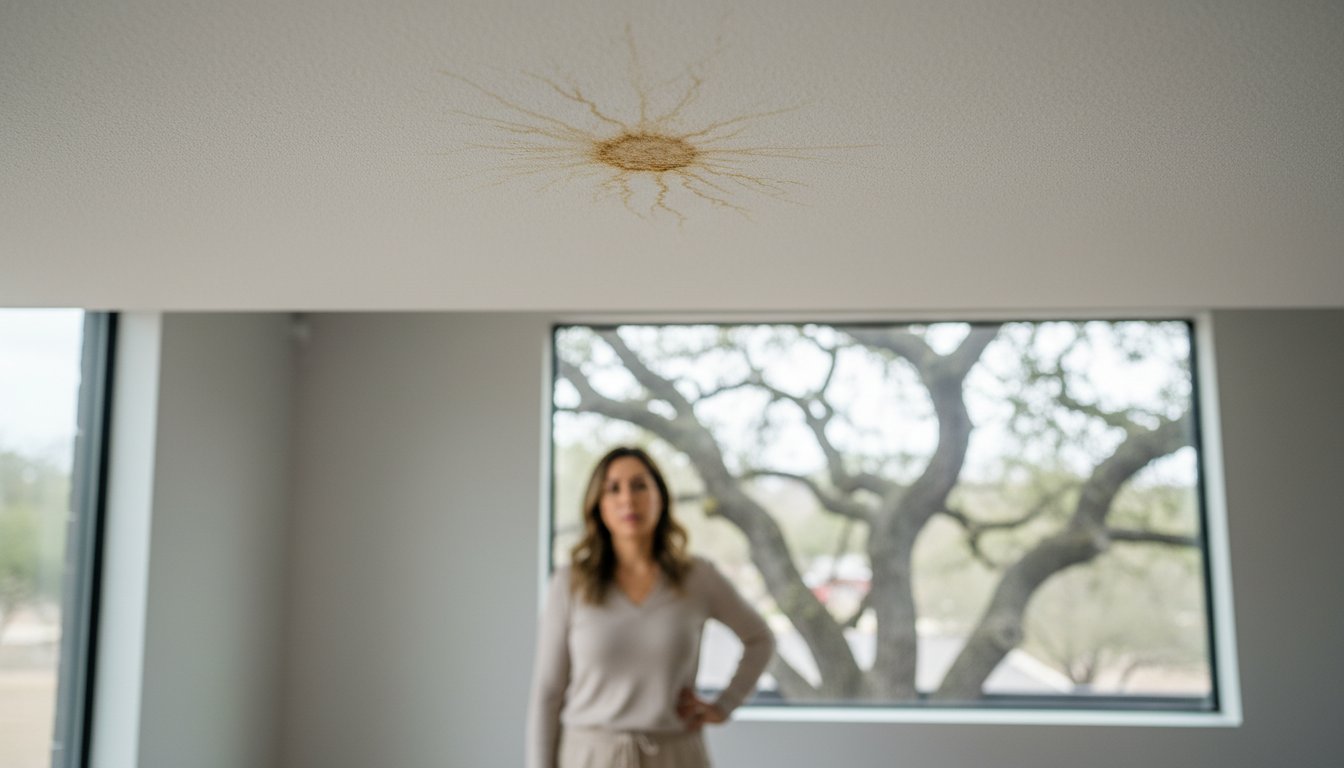
The most common indicator is a "coffee-colored" ring on the ceiling. If the stain has a dark, defined border, it signifies a leak that has dried and re-wet multiple times over several weeks. A fresh leak often looks like a damp, bloated patch without a distinct edge. You should also watch for bubbling paint or peeling wallpaper; these occur when water becomes trapped between the drywall and the surface finish.
Pay close attention to light fixtures and ceiling fans. Because water follows electrical conduits, a leak near a light is an immediate safety hazard that requires a professional inspection. Check the corners where your walls meet the ceiling too. These areas are vulnerable because moisture often runs down the interior of the wall studs before it becomes visible. If you notice these symptoms, it is wise to schedule a professional assessment to safeguard your property.
The Attic Investigation: Shiners and Frosting
Your attic provides the most honest look at your roof's health. During your inspection, look for "shiners." These are nails that missed the wooden framing during installation and now stick out into the attic space. In cold or humid weather, moisture condenses on these cold metal nails, creating a "frosting" effect that eventually drips onto the floor below.
Check the underside of the roof deck for dark "flow marks" or water tracks. These look like dried tea stains and point directly to the source of the entry. Don't rely solely on your eyes; use your nose. Damp fiberglass insulation loses up to 40% of its insulating R-value and emits a sharp, musty odor long before you see a puddle. Understanding these signs of a leaking roof is the first step in maintaining a resilient home.
- Perimeters of skylights and solar tubes
- Drywall around chimney flues
- Ceiling areas directly below roof valleys
- Vents in laundry rooms and bathrooms
- Closets housing HVAC air handlers

Exterior Indicators: What Your Shingles and Gutters Reveal
While interior water stains provide evidence of a problem, the root cause usually sits on your roof's surface. Austin homeowners face unique challenges; the city averages 300 days of sunshine annually. This intense UV exposure cooks asphalt shingles, making them brittle and prone to failure over a 15 to 20 year lifespan. You don't need a ladder to spot trouble. Grab a pair of binoculars and scan your roofline from the lawn to identify early signs of a leaking roof. This proactive approach ensures the protection of your home's structure before a minor drip becomes a major expense. These visual cues are the most reliable signs of a leaking roof that you can spot from the safety of the ground.
Damaged Shingles and Granule Loss
Look for shingles that are cupping or curling at the edges. This distortion often indicates that moisture is trapped underneath the material, compromising its ability to shed water effectively. Check your downspouts after a heavy rain for sediment that looks like coarse coffee grounds. Finding these granules in your gutters is a clear signal that 25% or more of your roof's protective layer may be compromised. If you notice missing shingles after a Central Texas storm with wind gusts exceeding 50 miles per hour, your home is vulnerable; these gaps require immediate tarping to prevent water from saturating your decking and causing rot.
Flashing, Chimneys, and Vents
Seasoned experts identify damaged flashing as the primary source of 90% of residential leaks. Flashing serves as the steadfast barrier around roof penetrations, but the sealant doesn't last forever. In older Austin neighborhoods like Hyde Park or Tarrytown, homes often feature cracked rubber vent boots or rusted chimney caps that allow water to bypass the shingle layer entirely. Pay close attention to the step flashing installed along dormers and wall intersections. These L-shaped metal pieces frequently fail first because they handle high volumes of runoff during our heavy spring downpours. Maintaining these transition points is vital for long-term assurance and ensures your roof performs at its best throughout the year.
How to Find a Roof Leak: A Homeowner’s Investigation
Locating the entry point of water requires a disciplined, systematic approach. You shouldn't start your search by climbing onto your shingles. Safety is the absolute priority for every Austin resident. Never walk on a roof with a pitch steeper than a 4/12 grade or any surface that is currently wet. Statistics from the 35 years of experience at Pro Roofing Systems show that most structural damage starts small, often hidden behind rafters or tucked under thick layers of insulation.
Effective investigation relies on the concept of reverse engineering. Gravity pulls water downward, but surface tension allows it to crawl along boards and beams before it finally drips onto your ceiling. This means the wet spot in your living room might be 12 feet away from the actual breach. You'll need a high-powered flashlight and a focused mindset to trace these moisture trails back to their origin. Seeking Expert Roofing Guidance early in this process can prevent you from misdiagnosing the issue and wasting money on incorrect DIY repairs.
The "Hose Test" for Stubborn Leaks
If you can't find the source during a dry spell, you can simulate a rainstorm using a standard garden hose. This process requires two people: one stationed on a secure ladder and one positioned inside the attic with a light. You must follow a bottom-up strategy to be successful:
- Begin at the lowest point of the roof, focusing on the gutters and eaves first.
- Apply a steady stream of water to one isolated section for at least 15 minutes before moving higher.
- Communicate via phone to signal exactly when the drip starts inside the attic.
- Don't move the hose upward until you've thoroughly tested the lower zones, or you'll mask the true leak site.
Roof Leak vs. AC Condensation: How to Tell
During the peak of the Texas summer, what looks like a roof failure is frequently an HVAC malfunction. Austin homeowners should check the weather correlation immediately. If you notice moisture after 10 days of direct sun and zero precipitation, your AC primary drain line is likely clogged. Check the water temperature; AC condensation is usually chilled, while rainwater matches the ambient outdoor temperature. Additionally, examine the location. If the moisture is concentrated directly under your attic unit or near the refrigerant lines, it's a mechanical issue rather than one of the traditional signs of a leaking roof.
Protecting Your Investment: Next Steps for Austin Homeowners
Identifying the primary signs of a leaking roof is a vital first step, but prompt action is what truly safeguards your home. Water damage is progressive. A small brown spot on your ceiling today can evolve into structural rot or a 1,500 dollar mold remediation project within weeks. Pro Roofing Systems has provided unparalleled expertise to the Austin community for over 35 years, helping neighbors navigate these exact challenges. Most roofing issues are fully repairable when caught early, providing you with a cost-effective alternative to a total replacement.
Professional intervention is the only way to achieve 100% certainty regarding your home's safety. Our seasoned team understands the specific stressors that Central Texas weather places on a structure. We focus on long-term protection rather than quick fixes, ensuring your investment remains secure for decades.
When to Call a Professional Austin Roofer
Safety should be your main priority. Homeowners should never attempt to climb steep pitches or inspect damage during active storms. You need to call an expert if you encounter these specific scenarios:
- Leaks appearing in multiple rooms after a single rain event.
- Roof heights exceeding a single story or slopes that are too steep for stable footing.
- Significant shingle loss following wind gusts that exceed 50 mph.
A professional detailed inspection covers critical areas you might miss. We examine attic bypasses, chimney flashing integrity, and the condition of pipe boots. These components often fail long before the shingles themselves, creating hidden moisture traps that only an expert eye can detect.
Preparing for Your Roof Repair Estimate
Preparation helps streamline the restoration process. Start by documenting any interior damage, such as water rings or peeling paint, with clear photographs. This evidence is essential if you need to file an insurance claim after one of Austin's frequent hailstorms. We assist homeowners by providing clear, declarative reports that simplify the claims process.
Our Quality Materials Promise ensures that every repair uses resilient, high-grade components designed for longevity. We don't settle for substandard sealants that crack under the Texas sun. Choosing professional care means your roof will guarantee durability for 20 years or more. It's time to stop the drip and start protecting your home. Schedule a free estimate today to get the steadfast assurance your family deserves.
Secure Your Austin Home Against Water Damage
Your roof serves as the primary shield for your property. Ignoring the early signs of a leaking roof often leads to expensive structural repairs and hazardous mold growth. Whether you've spotted water rings on your ceiling or noticed shingles curling after a storm, these indicators require immediate attention. Acting now ensures your home remains resilient against unpredictable Central Texas weather patterns. It's always better to identify a small vulnerability before it becomes a major financial burden.
Pro Roofing Systems brings 35+ years of local Austin experience to every project. We provide A+ rated professional roofing services and steadfast emergency support assurance to keep your family safe and dry. Our seasoned team focuses on providing unparalleled expertise that extends the lifespan of your investment. We don't just patch holes; we deliver comprehensive protection that you can trust for decades. Our commitment to quality ensures your peace of mind through every scorching summer and heavy rainstorm.
Don't wait for a minor drip to become a major crisis. Take the proactive step to safeguard your residence today. Get Your Free Expert Roof Inspection in Austin and let our professionals provide the clarity you need. We're ready to help you maintain a secure and steadfast home.
Frequently Asked Questions About Roof Leaks
Is a small water stain on the ceiling always a sign of a roof leak?
A water stain is one of the most common signs of a leaking roof, though it doesn't always originate from the shingles. Statistics show that 85% of ceiling spots in Austin homes stem from roofing failures, while the remaining 15% involve HVAC condensation or plumbing leaks. You shouldn't ignore a circle even the size of a quarter, as it confirms water has already bypassed your home's thermal envelope.
How long can I wait to fix a leaking roof in Austin?
You should contact a professional within 24 hours of noticing signs of a leaking roof. Austin's humidity levels often exceed 60%, which allows toxic mold spores to colonize damp drywall in less than two days. Delaying a repair for just 3 weeks can turn a $500 shingle fix into a $4,000 structural restoration project involving rafter replacement and interior remediation.
Can I fix a roof leak from the inside of my attic?
No, attempting to seal a leak from the inside is a temporary measure that fails to stop the actual damage. Water typically enters through a breach in the 30-year shingles or flashing and travels 5 to 10 feet along a rafter before dripping. Professional crews must work from the exterior to ensure the 100% waterproof integrity of your home's defense system and prevent wood rot.
Does homeowners insurance in Texas typically cover roof leaks?
Most Texas HO-3 policies cover leaks resulting from sudden events like the 2023 spring hailstorms or 70 mph wind gusts. However, insurance providers generally deny claims for leaks caused by lack of maintenance on roofs older than 20 years. Our seasoned team helps you navigate the claims process by providing documented evidence of storm-related impact to ensure you receive the protection you've paid for.
How do I tell if a leak is coming from my roof or my AC unit?
You can distinguish the source by monitoring when the dripping occurs. If the ceiling gets wet during a half-inch rainstorm, the roof is the culprit. If the leak persists during a dry 100-degree Austin afternoon, it's likely a clogged 3/4-inch condensate line or a rusted secondary drain pan. Check your attic unit's emergency pan for standing water to confirm the source of the moisture.
What happens if I ignore a minor roof leak?
Ignoring a leak leads to rapid structural decay and compromised safety. A small intrusion can saturate R-38 fiberglass insulation, stripping it of 50% of its insulating value and spiking your monthly energy bills. Over a period of 4 months, persistent moisture weakens the structural integrity of your 2x6 decking and provides a breeding ground for wood-destroying insects like subterranean termites.
How much does the average roof leak repair cost in Austin?
The average cost for a professional roof repair in Central Texas ranges from $400 to $1,500 depending on the severity. A minor boot replacement or flashing seal might cost $450, while repairing a 10-square-foot section of rotted decking and shingles averages $1,100. Investing in a timely repair protects your home's value and prevents the $15,000 cost of a premature full roof replacement.
Can a leaking roof cause a fire hazard?
Yes, water from a roof leak creates a significant fire risk if it reaches your home's electrical system. Moisture contacting open 120-volt wiring in the attic or dripping into a light fixture can cause a short circuit. Since 10% of residential fires are attributed to electrical malfunctions, our expert technicians prioritize identifying leaks near junction boxes to safeguard your family and your property investment.
Need a Roof Inspection?
Free, no-obligation inspection from Austin's most trusted roofing team.
Get Free Quote 512-800-7010Explore more roofing tips and guides from our team.
Back to All Articles