What to Do After a Hail Storm Hits Your Roof: A Complete 2026 Checklist
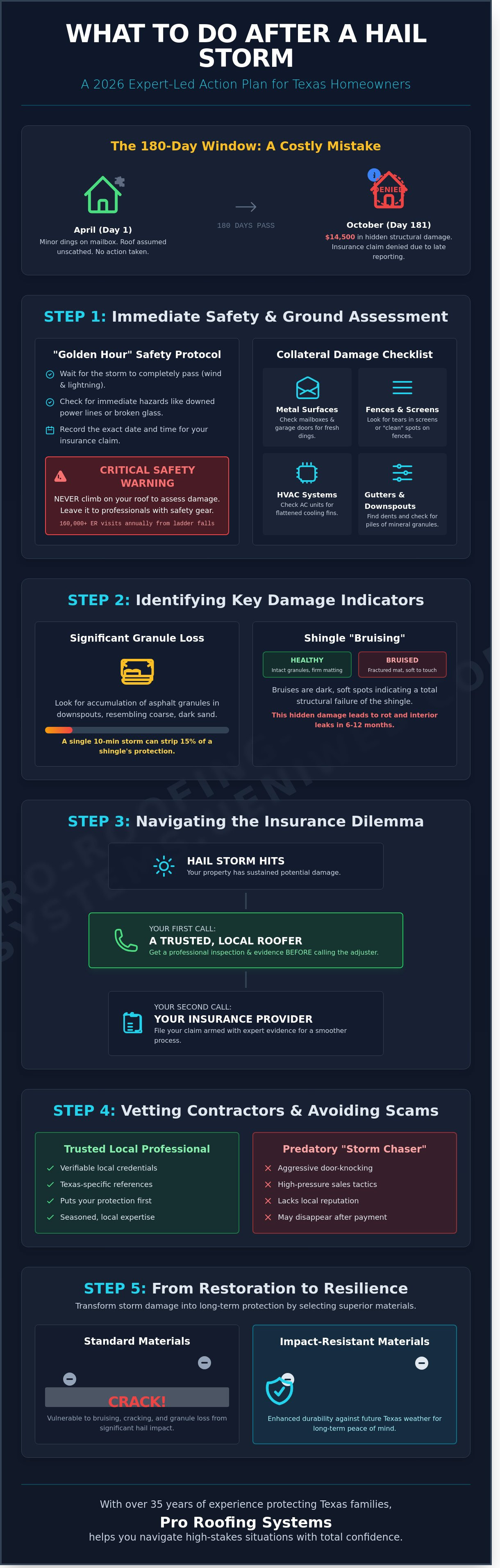
Last April, a Dallas homeowner noticed minor dings on their mailbox but assumed their shingles were unscathed. By October, a hidden leak had caused $14,500 in structural damage that their insurance provider denied because the 180 day reporting window had closed. Knowing exactly what to do after a hail storm hits your roof is the difference between a simple repair and a total financial loss. You deserve to feel secure in your home without the constant anxiety of rising premiums or the pressure of aggressive contractors knocking on your door after a Texas storm.
With over 35 years of experience protecting Texas families, we provide the seasoned expertise you need to navigate these high-stakes situations with total confidence. This 2026 checklist offers a clear, expert-led action plan to help you safely assess damage, meet strict insurance deadlines, and safeguard your property's long-term value. We will walk you through the precise steps to identify hidden issues, document evidence for your claim, and connect with a trustworthy local professional who puts your protection first.
Key Takeaways
- Prioritize your safety with a "boots-on-the-ground" assessment strategy that identifies critical exterior damage without the risks of using a ladder.
- Master the art of spotting roof trauma by analyzing gutter accumulation and identifying shingle "bruising" that compromises your home's resilience.
- Navigate the insurance process with confidence by learning exactly what to do after a hail storm hits your roof to secure professional evidence before calling an adjuster.
- Safeguard your property from predatory "storm chasers" by verifying local credentials and Texas-specific references for a trustworthy restoration.
- Transform storm damage into long-term protection by selecting impact-resistant materials that enhance your home’s durability against future Texas weather.
Step 1: Immediate Safety and Exterior Property Assessment
Knowing what to do after a hail storm hits your roof starts with patience. You must ensure the storm cell has completely exited the Austin area before stepping outside. High winds and lightning often persist even after the hail stops. Your priority is safeguarding your family while maintaining a calm, methodical approach to property assessment. Pro Roofing Systems prioritizes your protection, and that begins with a secure environment.
The "Golden Hour" Safety Protocol
The first 60 minutes after a storm are often the most hazardous. Before you begin your walk-around, check for downed power lines or leaning trees that could pose an immediate threat. Identify immediate hazards like broken window glass or flooded walkways that might lead to slips. Avoid the temptation to climb onto your roof. Our seasoned professionals use specialized safety gear and fall protection systems for a reason. Homeowner falls from ladders account for more than 160,000 emergency room visits annually in the United States according to the Consumer Product Safety Commission. It's vital to keep your feet firmly on the ground.
Document the exact date and time of the weather event. For instance, if a storm hit at 4:15 PM on April 12, 2024, record that specific detail immediately. Insurance adjusters rely on localized weather data from the National Oceanic and Atmospheric Administration (NOAA) to verify claims. Precise timing helps streamline your filing process and ensures your claim is rooted in factual evidence.
Identifying Collateral Hail Indicators
Conduct a "boots-on-the-ground" assessment by walking the perimeter of your home. You don't need to see the shingles to understand the severity of the impact. Instead, look for collateral damage on softer surfaces. These indicators provide the necessary proof to justify a professional inspection and safeguard your investment. Examine these areas specifically:
- Metal Surfaces: Check mailboxes and garage doors for fresh dings. Soft metals like aluminum show impact marks clearly and reflect the size of the hail stones.
- Fencing and Screens: Inspect wooden fences for "clean" spots where hail stripped away stain or oxidation. Check window screens for small tears, stretching, or punctures.
- HVAC Systems: Look at your outdoor AC unit. Hail can flatten the thin cooling fins, which reduces airflow and impacts system efficiency. This type of damage often requires a 100% coil replacement to maintain performance.
- Gutters and Downspouts: Search for dents along the gutter troughs. Check the discharge area of your downspouts for piles of mineral granules. High volumes of granules indicate significant shingle erosion.
Identifying these signs early provides the assurance that your home remains resilient. Understanding what to do after a hail storm hits your roof begins with these simple, safe observations that build a foundation for your restoration journey.
Step 2: A Homeowner’s Checklist for Spotting Roof Hail Damage
After the storm clouds clear, your first priority is ensuring the safety of your property. Knowing exactly what to do after a hail storm hits your roof is the difference between a simple maintenance fix and a catastrophic structural failure. Start your assessment at the ground level by examining your gutters and downspouts. If you notice an accumulation of asphalt granules that resembles coarse dark sand, your shingles have lost their primary layer of protection. In a severe storm, a 100-square-foot section of roofing can lose up to 15% of its protective granules during a single 10-minute hail event.
Next, you must identify "bruising" on the shingles. These are dark, soft spots where the internal matting has fractured under the weight of the impact. While they might look like minor cosmetic scuffs, these bruises represent a total structural failure of the shingle. Over the next 6 to 12 months, these weakened areas will allow water to seep into the wooden decking, leading to rot and interior leaks. This checklist provides the expert guidance you need when determining what to do after a hail storm hits your roof:
- Inspect Metal Components: Look for "pitting" or dents on aluminum vents, flashing, and valley tins. Soft metals show impact marks more clearly than asphalt.
- Check for Wind Damage: High-speed winds exceeding 50 miles per hour often accompany hail, causing shingles to crack or go missing entirely.
- Examine the Ridges: The peak of your roof often takes the most direct hits; check for jagged edges or missing pieces along the ridge caps.
- Analyze Downspout Discharge: Excessive granule loss in the splash block area is a 100% indicator of accelerated shingle aging.
The Anatomy of a Hail Hit
Granule loss isn't just an aesthetic concern. These small stones are designed to reflect solar radiation and protect the underlying asphalt from the sun. Without them, UV rays will cause the shingle to become brittle and crack within 24 months of exposure. While metal roofs are resilient and may only show surface dents, asphalt shingles suffer internal fractures that compromise the water barrier. Tile roofs require even closer inspection, as hail can cause "star cracks" that aren't visible from the ground but allow moisture to penetrate the underlayment. Our seasoned professionals provide unparalleled expertise in identifying these hidden fractures before they become costly emergencies.
Interior Warning Signs You Can’t Ignore
Don't limit your inspection to the outdoors. Take a high-powered flashlight into your attic and scan the rafters for water tracking or damp spots. Even a small breach in the roof can saturate fiberglass insulation, which reduces its R-value by as much as 40% and creates a breeding ground for mold. Check the ceilings of your upper-floor rooms for new stains or bubbling paint. These signs indicate that water has already bypassed your roof's primary defenses and is actively damaging your home's infrastructure.
Step 3: Navigating the Insurance Dilemma: Roofer or Adjuster First?
Many homeowners feel an immediate urge to call their insurance agent the moment the hail stops falling. This reaction is understandable, yet it's often the wrong first move. Knowing exactly what to do after a hail storm hits your roof requires a strategic approach to ensure your claim isn't denied or undervalued. In Texas, you typically have a window of 365 to 730 days to file a claim based on the standard statute of limitations, so there's no need to rush into a phone call without evidence.
Filing a claim immediately creates a record on your insurance profile. If an adjuster visits and finds no damage, or if the damage falls below your deductible, you still have a "zero-pay" claim on your history. This can affect your standing with the carrier. Because hail is considered an "Act of God," Texas law prevents insurance companies from raising your individual premiums solely because of a weather-related claim. However, your rates may rise based on the total number of claims in your zip code. It's vital to ensure you actually have a valid claim before you initiate the process.
Why an Expert Inspection Trumps a Quick Claim
A seasoned roofing professional provides the unparalleled expertise needed to document damage that an adjuster might miss. During peak storm seasons, insurance adjusters often manage 5 to 8 properties a day. This hurried schedule can lead to overlooked bruises or micro-fractures in the shingle mat. Our experts take the time to perform a steadfast evaluation, ensuring every bit of damage is accounted for.
- Detailed Documentation: We provide high-resolution photo evidence of granular loss and hail strikes, creating a baseline for your claim.
- Preventing Under-scoping: A professional estimate ensures the insurance company accounts for all necessary components, including ridge caps, flashing, and ventilation.
- Accurate Assessment: We identify the difference between old wear and tear and fresh storm damage to provide clarity during the adjustment.
Understanding Your Homeowners Policy Basics
Deciphering policy language is essential for the protection of your investment. You must know whether you have a Replacement Cost Value (RCV) or an Actual Cash Value (ACV) policy. Replacement Cost Value is the amount needed to replace your roof at current market prices without depreciation. An ACV policy only pays the depreciated value of the roof based on its age, which often leaves homeowners with a gap of $3,000 to $7,000 in repair costs.
Deductibles are another critical factor. Under Texas House Bill 2102, which became law on September 1, 2019, it's illegal for a contractor to waive a deductible or "absorb" the cost. If a company offers to cover your deductible, it's a major red flag that could lead to insurance fraud charges. Our team focuses on quality and transparency, helping you understand what to do after a hail storm hits your roof while staying compliant with state regulations. We ensure your roof performs at its best year-round by providing honest, expert guidance through every stage of the recovery process.
Step 4: Vetting Austin Roofing Contractors and Avoiding Scams
Knowing what to do after a hail storm hits your roof involves more than just picking up the phone. Austin sees roughly 4 to 6 major hail events every year, which attracts out-of-state "storm chasers" looking for quick payouts. These crews often lack a physical office in Central Texas and provide zero long-term support. You need a partner with a 35-year local reputation to ensure your home remains protected long after the clouds clear.
Verify every contractor by checking for manufacturer certifications from leaders like GAF or Owens Corning. These credentials confirm the team has undergone rigorous training and maintains high credit ratings. A seasoned professional can offer specialized warranties that standard laborers cannot match. Always request a copy of their insurance certificate to confirm they carry Texas-specific general liability and workers' compensation coverage. This protects you from legal or financial liability if an accident occurs on your property.
Red Flags of Post-Storm Fraud
- High-Pressure Sales: Avoid anyone claiming a discount is only available if you sign a contract immediately.
- Contingency Agreements: Don't sign documents that "lock you in" before your insurance company has officially approved the claim.
- Large Upfront Deposits: Professional roofers won't ask for full payment before any materials have been delivered to your home.
Scammers often use aggressive door-to-door tactics. They might offer to "waive your deductible," which is a form of insurance fraud in Texas under House Bill 2102. Legitimate experts will always provide a detailed, written estimate and wait for your insurance adjuster's report before finalized agreements are signed. This patient, professional approach ensures you aren't forced into a rushed decision that compromises your home's integrity.
The Benefits of a Local Austin Partner
Local roofers possess a deep understanding of Austin building codes and specific permitting requirements for Travis and Williamson counties. Because they live in the community, they rely on 35 years of word-of-mouth excellence to sustain their business. This local presence ensures that if you have a warranty claim three years from now, you'll know exactly where to find them. Choosing a neighbor means choosing accountability and quality craftsmanship tailored to the Texas climate.
Understanding what to do after a hail storm hits your roof is simpler when you have a steadfast expert on your side. A community-based contractor provides a seasoned approach that out-of-state crews cannot replicate, ensuring your roof performs at its best year-round.
Protect your home with a team that has 35 years of Central Texas expertise. Schedule your professional roof inspection today to secure your investment.
Step 5: Restoring Assurance with Pro Roofing Systems
While a storm brings immediate stress, a full roof replacement offers a rare chance to enhance your property's resilience. Understanding what to do after a hail storm hits your roof involves more than just temporary fixes; it requires a strategic upgrade. At Pro Roofing Systems, we use this opportunity to install high-performance systems that exceed standard building codes. With 35+ years of experience in "Keeping Texas Covered," our team transforms a damaged exterior into a steadfast shield against future elements. Knowing exactly what to do after a hail storm hits your roof means choosing a partner who understands the local climate and the long-term value of your investment.
Our process is meticulous and transparent. We don't just swap shingles. We evaluate the entire roofing deck, ventilation, and drainage system to ensure peak performance. Our seasoned professionals follow a strict timeline to deliver peace of mind:
- Initial 50-Point Inspection: We document every point of failure, from granule loss to structural decking issues.
- Precision Installation: Our crews use high-quality, impact-resistant materials designed to withstand the harsh Texas climate.
- Final Site Cleanup: We use magnetic sweeps and manual inspections to ensure your property is 100% clear of debris.
Our Precision Solution for Hail Recovery
We provide a detailed damage report specifically formatted for your insurance carrier. This documentation includes high-resolution photos and specific measurements to prove the extent of the impact. We prioritize the use of Class 4 impact-resistant shingles. These materials are tested to withstand 2-inch hailstones without cracking. This commitment to "Quality and Care" ensures your residential or commercial property remains secure during the next major weather event. We've seen how 90-mph winds can devastate a roof, and we build specifically to counter those forces with unparalleled expertise.
Securing Your Investment for the Long Term
A new roof is a significant capital improvement that adds value to your home. To maximize this lifespan, we recommend a professional maintenance check every 24 months. Our expert roofing guidance helps you identify minor issues, like clogged gutters or damaged flashing, before they become expensive leaks. By choosing seasoned professionals, you guarantee your roof performs at its best year-round. It's about more than just a single repair; it's about long-term protection and steadfast reliability. Protect your home today with a Free Inspection from Pro Roofing Systems.
Secure Your Texas Home with Expert Guidance
Navigating the aftermath of a Central Texas storm doesn't have to be overwhelming. By prioritizing immediate safety and conducting a methodical property assessment, you've already taken the first step toward long-term protection. Identifying subtle signs of impact early is vital for preventing structural issues. Remember that your choice of contractor determines the longevity of your repair; always prioritize established local specialists who understand the complexities of the insurance claim process.
Knowing exactly what to do after a hail storm hits your roof saves you time and prevents the stress of dealing with unscrupulous "storm chasers." Pro Roofing Systems brings 35+ years of Central Texas experience to every project. Our A+ rated team provides the steadfast expertise you need to navigate insurance adjusters and restore your home's resilience. We offer seasoned guidance that safeguards your property value while delivering the peace of mind you deserve.
Schedule Your Expert Roof Inspection with Pro Roofing Systems to ensure your home remains a safe haven for decades to come. Your property is a major investment, and we're here to help you protect it.
Frequently Asked Questions
How much hail does it take to damage a roof?
Hail measuring 1 inch in diameter, or the size of a quarter, is the standard threshold for causing structural damage to asphalt shingles. While smaller pea-sized hail rarely causes issues, stones reaching 1.25 inches often fracture the underlying fiberglass mat. Our seasoned professionals have documented significant granule loss from 1.5-inch stones that reduced a roof's effective lifespan by 8 years in a single afternoon.
Should I file a claim if I only see minor hail damage?
You should file a claim because small indentations often represent bruised underlayment that will fail during the next heavy rain. Understanding what to do after a hail storm hits your roof includes getting a professional inspection to document these subtle issues before your 12-month filing window closes. Even minor granule loss exposes the bitumen layer to UV rays, which accelerates shingle decay by 50 percent within two years.
Can I wait a few months to fix my roof after a hail storm?
Waiting more than 30 days to address hail damage risks secondary issues like mold growth and wood rot in your attic. Most insurance policies require homeowners to mitigate damage promptly to remain eligible for full replacement coverage. If you delay repairs for 6 months, an adjuster might argue that interior water damage resulted from homeowner negligence rather than the initial storm event.
What happens if my insurance adjuster denies my hail damage claim?
You have the legal right to request a second inspection or hire a public adjuster to provide a counter-assessment of the property. Data from the Texas Department of Insurance shows that many initial denials are overturned when a seasoned roofing expert provides high-resolution photo evidence of 10 or more hits per 100 square feet. We provide the steadfast documentation needed to ensure your investment remains protected during these disputes.
Do I need to replace my whole roof if only one side was hit by hail?
Insurance companies usually pay for a full replacement if more than 25 percent of the total roof area is damaged or if the shingles are discontinued. Matching aged shingles is nearly impossible, and a partial repair often fails to provide a uniform moisture barrier. Our 35 years of experience shows that full replacements offer the best long-term assurance for your home's structural integrity and resale value.
Will my insurance rates go up if I file a hail damage claim in Texas?
Texas law prohibits insurance companies from raising your individual rates due to a claim caused by an Act of God, such as a hail storm. However, premiums often increase for an entire zip code after a major weather event occurs. Since you're likely paying for the regional rate hike regardless, filing a claim ensures you receive the protection benefits you've already funded through your monthly premiums.
How do I know if a roofing contractor is a storm chaser?
A storm chaser typically uses out-of-state license plates and lacks a permanent local office address within 50 miles of your home. These entities often appear within 48 hours of a storm and push for immediate signatures before providing a detailed estimate. Look for an established partner with a 30-year history in the community to guarantee your warranty remains valid for its entire term.
What is the difference between functional and cosmetic hail damage?
Functional damage affects the roof's ability to shed water, while cosmetic damage only impacts the appearance of the materials. Knowing what to do after a hail storm hits your roof involves identifying functional issues like split seams or exposed asphalt. Insurance policies sometimes exclude purely aesthetic marks on metal vents, but they must cover any damage that reduces the roof's 20-year or 30-year service life.
Need a Roof Inspection?
Free, no-obligation inspection from Austin's most trusted roofing team.
Get Free Quote 512-800-7010Explore more roofing tips and guides from our team.
Back to All Articles